A conversation with CapMan Wealth
Manager insight

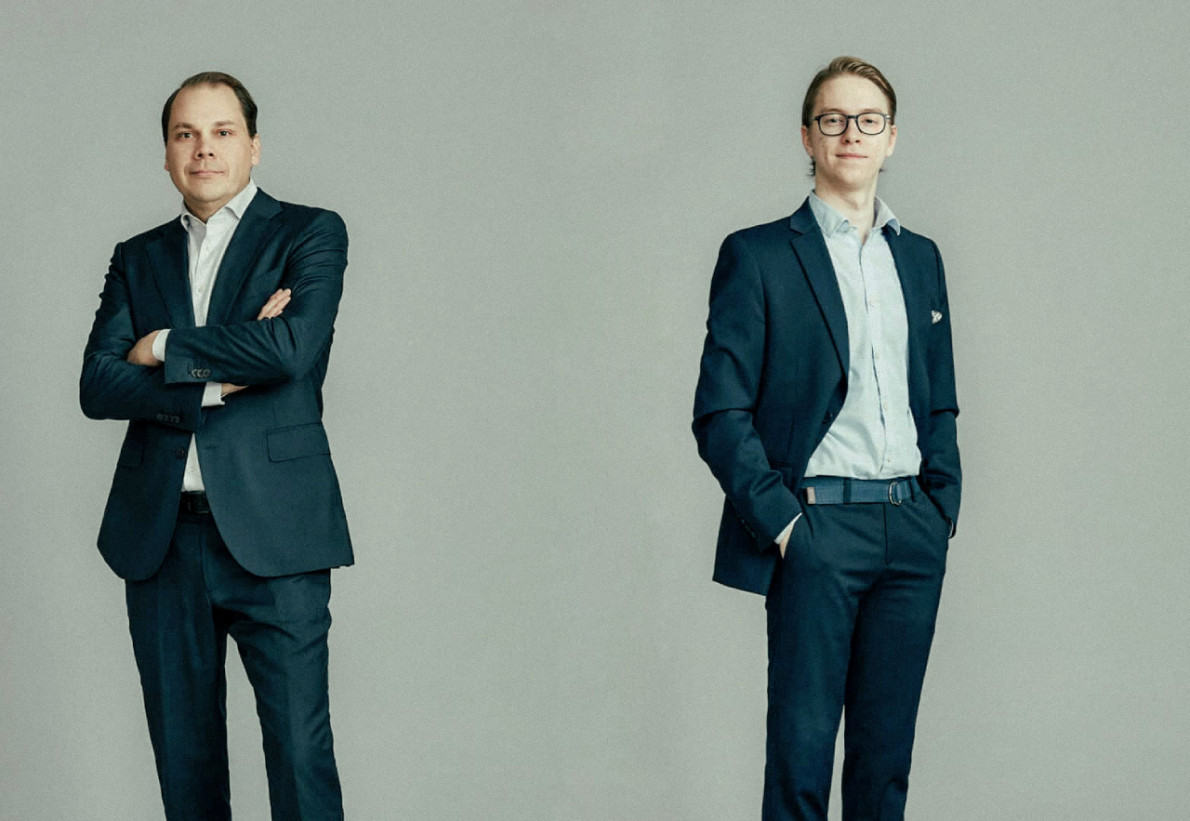
“You could tell a five-year-old that we try to distinguish the most skilled investors from the lucky ones. Everyone finds a way to present their own product as superior; our task is to uncover where the good returns have come from…” says Mikael and Jonatan from CapMan Wealth. CapMan Wealth serves as the asset management arm of the CapMan Group and as the portfolio manager of two AIFs, for which GRIT acts as the AIFM. One of the funds invests in global private credit, whereas the other has exposure to companies whose core business is centralized on tackling ESG-related issues. Roughly two and a half years after the launch of the formerly mentioned fund with GRIT, we sat down with Mikael Löfberg, Chief Investment Officer and Jonatan Lehtinen, Portfolio and Fund Selection Manager, to discuss their fund selection process, the rise of private credit, their strategies and what sets them apart.
CapMan Wealth focuses on independent asset management and regards itself as a buy-side investor. “From the beginning, the idea was not to build our own liquid equity or credit funds, instead we wanted to remain fully independent,” the duo says. Instead of selling in-house products, they focus on identifying the best external funds for their investors. When Mikael and Jonatan joined CapMan Wealth around the same time a decade ago, they had the chance to build something from the ground up. Mikael brought valuable private markets experience from Deutsche Bank, along with a strong understanding of private market infrastructure.
As mentioned, a large part of Mikael’s and Jonatan’s work is devoted to identifying the best funds to invest in, which means spending a significant amount of time meeting different fund managers. After meeting hundreds of international managers over the years, the duo has gathered valuable insights into the fund management industry. “Networks are extremely important in this business. When we started out, we were less well known and counterparties would ask, ‘Where are you calling from and who are you?’ Today, however, we are much better known in the market,” says Mikael. Now things look very different compared to when CapMan Wealth began its business: the duo is frequently invited to take part in panel discussions; they attend major events and connect with other respected investors. Even though they are not the largest players in the market, they receive daily calls from international managers, e.g. from London, looking to present their products to the duo. On average, they meet around 150-200 external fund managers each year, giving them broad insight into global trends and developments across the fund management industry. “Engaging in thoughtful discussions with international investors who are not active in Finland gives us valuable perspectives on other managers in the market. These exchanges also deepen our understanding of what is going on globally and help us evaluate different opportunities,” says Mikael.
Even though the pair regard networking as one of the most important tasks in their business, the duo is very critical about their time management and who they invest in. “We always work in the best interest for our investors. We don’t have time for fancy lunches or rounds of golf with managers. We want to maximize our time understanding the fund managers and their products” says Mikael, “although sometimes gaining access to the best teams and funds requires networking. Around one third of the funds in our portfolio are access constrained, meaning that they do not allow access to new investors. In those types of situations, you sometimes need to navigate to gain access to the best unit classes” Jonatan adds.
After meeting hundreds of managers, the duo has seen clear differences from one region to another in the kinds of products fund managers offer and how they allocate capital. “In Europe, major players rely heavily on their own in-house products; if an investor opens a portfolio report, many of the products are the firm’s own offerings. Specifically in Central and Southern Europe, there is a preference for household names and products from large fund companies. From our perspective, those products can be somewhat dull, too diversified and too generic, which often leads to average performance. We have also noticed that small to mid-size players, especially in the Nordics, are more open to investing in lesser-known funds and are more dynamic with who they invest in,” Mikael adds.
So how does a fund earn a place in the portfolio? According to Mikael and Jonatan, the fund selection process depends heavily on the product and market they are assessing; everything comes down to the asset class, the underlying instruments, and whether the strategy focuses on traditional or alternative investments. “Everything begins with quantitative monitoring, where the goal is to track the entire universe of potential investment targets for European professional investors. This involves reviewing 10,000 rows covered by various databases,” says Mikael. Once the quantitative analysis is complete, the real challenge begins as the pair turn their attention to the individual fund managers. “We want to know as much as possible about the funds before we meet the managers so that we can challenge them and ask very detailed questions. It helps that we now have experience from meeting hundreds of managers, which gives us a strong basis for comparison,” he adds.
“You could tell a five-year-old that we try to distinguish the most skilled investors from the lucky ones. Everyone finds a way to present their own product as superior; our task is to uncover where those strong returns have come from, whether they stem from a particular moment, a specific year, a sector, or a few individual stocks. We want to know how broad-based and systematic those good returns have been so that we can choose the best managers,” says Mikael. For Mikael and Jonatan, the choice of manager is more important than the funds’ historical track record. “If we are in a situation where three funds have performed and met all our qualifications equally well, we make our decision based on the manager or team rather than the performance of the fund,” says Jonatan. “We take everything into account. For example, if a junior team member looks at a senior colleague before speaking, that tells us something about the team dynamic. We believe everyone on the team should have a voice, regardless of seniority. That is how we work ourselves,” says Mikael.
The pair emphasize that, to maximize diversification, they strictly ensure there is no overlap with existing portfolio holdings during the investment selection process. “We not only want to make sure that the underlying instruments do not overlap, but also that there are clear differences between the fund managers themselves within the portfolios. We want diversification among managers as well, all the way from investment style to geographical location of the managers,” says Mikael. What also sets CapMan Wealth apart from more traditional managers is that they can change the funds they invest in with a relatively low threshold. “Other players typically invest in products and never leave, whereas we can change funds if we find it necessary” says Jonatan. Once they have found the right manager, the pair start to negotiate the fees to be as low as possible. “We don’t want rebates or kickbacks, we want the cheapest unit class, and we are usually able to negotiate significant discounts on the classes,” the pair adds.
The term private credit has appeared frequently in the media over the past few weeks and months, often in a rather alarming tone.
“The media has recently portrayed the private credit market as highly risky, but if you take a step back, you can see that private credit largely emerged in the aftermath of the financial crisis in the United States and Europe. Before that, major banks were both able and willing to finance companies’ investments and growth. After the financial crisis, however, regulation tightened significantly on both sides of the Atlantic, limiting banks’ balance sheet capacity and willingness to take risk. As a result, banks increasingly focused their lending on the largest borrowers, leaving many mid-sized companies outside the traditional financing market. Private lenders recognized this opportunity and stepped in to fill the gap. In the United States, firms such as Apollo, KKR, and similar houses have raised enormous funds and gradually expanded their market share,” says Mikael.
“It is also important to remember that direct lending means a fund providing a loan directly to a single company. In many cases, the borrower also has a private equity sponsor involved, which can provide an additional layer of comfort for lenders, since there is a professional equity investor supporting the company and helping ensure that private credit remains an attractive financing option from the company’s perspective. When borrowers are asked why they chose private credit, the answer is often simple: either banks were not willing to lend, or bank financing would have been more expensive,” Mikael adds.
“In transactions of, say, €100 million, larger banks are often unwilling to finance the company on their own. Instead, a syndicate of four or five banks may be required to negotiate the loan together. That is a lengthy process, and the risk of something falling through along the way is higher. By contrast, when a company negotiates with a private credit lender, the process is typically much faster. Because the loan comes from a single lender to a single borrower, it also allows for greater flexibility. If the company meets certain financial criteria, it may be able to raise additional financing on the same terms six or twelve months later if market conditions are favourable and the company wants to invest more. It is also easier to renegotiate terms if the company runs into challenges, compared with a loan involving a large syndicate of banks. Private credit is here to stay,” summarizes Mikael.
Jonatan adds: “It is important to be cautious when a market is growing this quickly. Private credit is, in many ways, the oldest form of lending in the world, simply one entity lending money to a company. It is one of the earliest forms of investing and financing, yet today it is often discussed as if it were a new asset class or financing mechanism, when it is an extremely old one. We both see it as an opportunity. It is a large market that continues to grow, and more participants is a positive development for us, because it gives us more choice in terms of who we work with and what we do. At the same time, you must be careful, because there are very significant differences between the managers who have entered the market on the back of the hype, both in the quality of what they do and in the composition of their portfolios versus larger, already established funds. The managers we work with benefit from a growing loan market because it allows them to be much more selective in their underwriting.
Mikael and Jonatan have an extensive track record in sustainable investing, continually evolving their approach to integrating sustainability factors into their investments. With the CapMan Wealth Gaia AIF, also known as the pairs “favorite child”, their ambition was not just to meet conventional ESG standards, but to create a fund that has exposure to companies whose core business is dedicated to solving ESG-related challenges. “ESG funds typically end up with the same type of companies with minimal differences, what we did instead was that we searched the whole investment universe, over 400 funds and tried to find fund managers who invest in companies whose core business is focused on achieving United Nations sustainable development goals. The underlying companies in the fund are businesses that actively address issues such as waste management, water conservation, sustainable agriculture, and renewable energy,” they explain. The portfolio is globally diversified, with careful attention to ensure there are no redundancies among holdings or managers. “The portfolio consists of exposure to large corporations whose aim is to solve the world’s largest problems from a sustainability perspective, and is therefore a very interesting investment opportunity,” Jonatan adds.
The CapMan group also has extensive experience in private markets. For example, evergreen semi-liquid funds have been a part of their solutions for roughly 6–7 years. “Allocation in private markets has existed for a long time in our investors’ portfolios, but also in Finland as a whole. Compared to others, we already had a lot of experience within these types of markets before private markets became trendy so to speak. This experience has been extremely beneficial when creating the fund,” says Jonatan. The process of launching the CapMan Global Private Credit AIF began in 2023 when CapMan Wealth noticed that there was a sudden burst of evergreen solutions in the markets. “Big firms started calling us and were telling that they were in the process of launching evergreen private credit and private equity funds. The investment universe grew extremely fast,” says Jonatan. The pair felt a strong interest among CapMan’s investors in private credit solutions and the pair got to work. “We started thinking, how can we implement this in our strategy but also in a smart way. We wanted a flexible, easy, and effective solution so that we could get private credit exposure to our investors” They started screening the whole investment universe. Having screened for a couple of years, the pair found the most suitable fund managers for the portfolio.
To build a solution like this for CapMan Wealth’s investors, choosing the right fund management partner was essential, and that is where GRIT came in. “We already knew that GRIT’s structure works, so we do not have to worry about the fund structure. With GRIT, we can focus fully on investing and directing all our resources to our core business, which is investing and investor relationships. With GRIT, we do not have to worry about the regulatory side of fund management,” says Mikael.
“The fund focuses on the most boring part of private credit, namely direct lending. All the loans in the portfolio are floating, everything is collateralized, first seed senior, but at the same time the fund currently offers an intriguing return compared to the classical credit market,” says Jonatan. “We wanted managers without too many overlaps in the investment styles, quantitatively, and within the underlying loans so that we could build an extremely diversified portfolio. If we take Ares for example, which is a European private credit house, the largest non-bank lender, they invest in smaller firms and are in around 90% of the cases the only lender in a loan. It gives them a unique position from a controlling perspective, how they affect the company and how they build the loan, whereas Hamilton Lane always works with other sponsor lenders, usually 2-3 lenders in the same loan. Index might be the wrong word, but the funds’ diversification gives our investors access to an index looking portfolio in terms of size and diversification of private credit. The fund now has exposure to over 1000 underlying loans across the world,” the pair adds.
When Mikael and Jonatan aren’t immersed in meetings with fund managers, engaging with investors, or analyzing portfolios, they enjoy unwinding through unique and intriguing activities. For Jonatan that means travelling and playing instruments “I love playing different kinds of instruments, everything from the piano to the mandolin” When asked Mikael if he is as musical as Jonatan, he quickly responds that the only instrument he knows how to play is the cellphone. “I'm serious about renovating, I've got everything at home down to a concrete mixer. Sometimes the neighbors think I work at Ramirent. I love working with my hands, and I have an old wooden house in Käpylä, so I've spent a lot of time fixing it up. If I weren't a portfolio manager, I'd be a construction worker. I handle everything: tiles, drainpipes, you name it,” Mikael jokes. “This probably sounds concerning for our investors, having a guy who plays the mandolin and a construction worker as their portfolio managers,” Jonatan adds, laughing.
The duo is optimistic about the future. “Last year, our investor base grew at a record pace, and this year is already off to a strong start. We are gaining clear momentum in the market and becoming increasingly recognized, which is an encouraging sign. This means hiring new staff, which is always fun. From a product perspective, we believe we offer a broad and compelling range of solutions, with the ability to invest across all asset classes. This year, our focus is on ensuring our investors’ portfolios and allocations are in the strongest possible shape,” they say.
This is marketing communication produced by GRIT Fund Management Company Ltd. The information given herein is not sufficient to make an investment decision. Read the prospectus and the key information document (KID) of the fund before making any final investment decisions. The value of an investment may rise or fall, and investors may lose part or all of the capital invested.